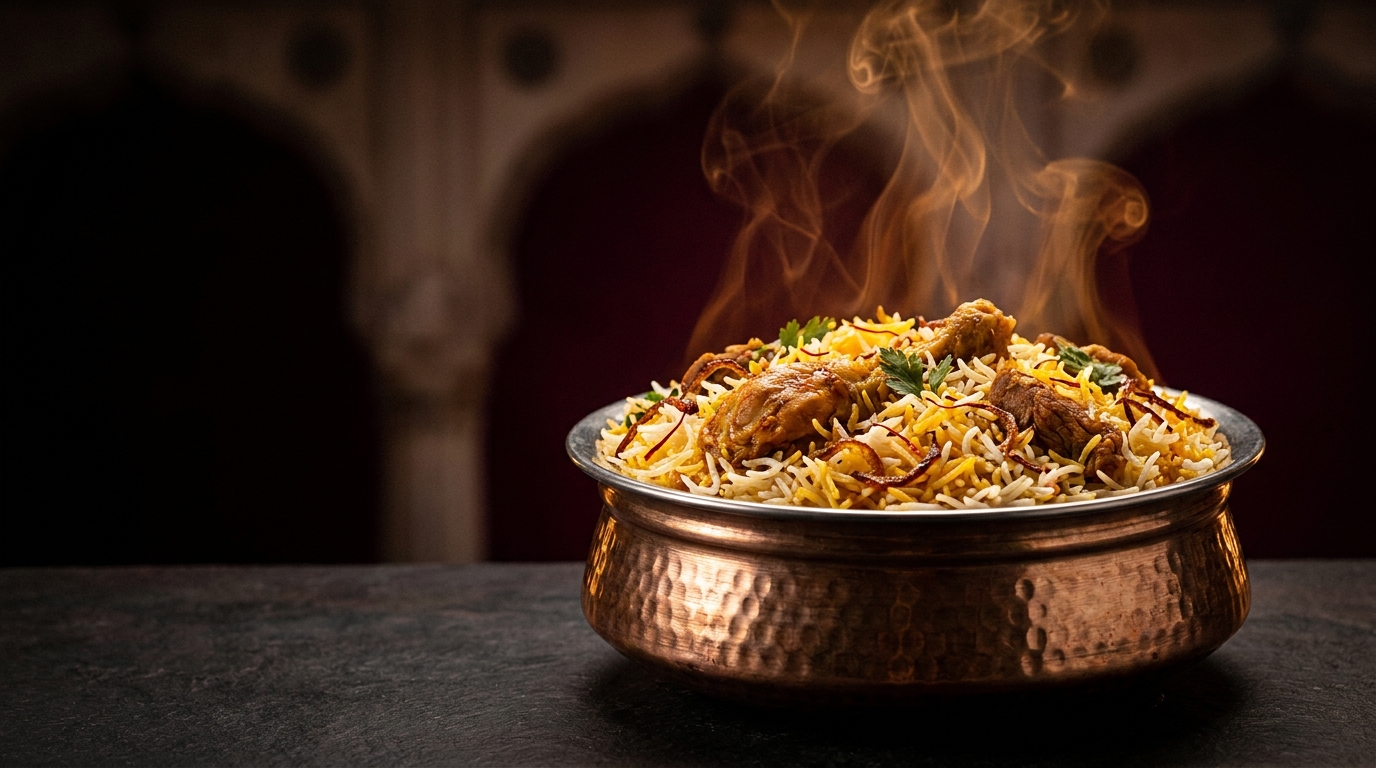
A rice dish with many ancestors
Its Persian-linked name and rice-meat lineage travelled widely before Hyderabad made the dish its own.
The material presents biryani as a descendant of pulav or pilaf. One account traces Iranian pilaf varieties to South Asia through Arab traders; its name may derive from Persian birinj (“rice”) or biryan (“fried”).
But older Indian texts—including the Valmiki Ramayana, Mahabharata and Upanishads—and the 12th-century Pakadarpana also describe rice-and-meat dishes. These strands suggest a layered lineage, not one settled invention story.
After the Mughal conquest of Hyderabad in the 1630s, Mughlai and local culinary traditions merged in the city. The emerging biryani style became associated with the Nizam’s royal kitchens and may have integrated Deccani or Telangana flavors.
By 1857, Hyderabad had become a major South Asian cultural center, creating fertile ground for further innovation in its distinct biryani tradition.
“The mid-18th-century tale of the first Nizam’s chef creating the dish during a hunting expedition is local folklore, not an established origin.”
— Hyderabadi biryani origin tradition