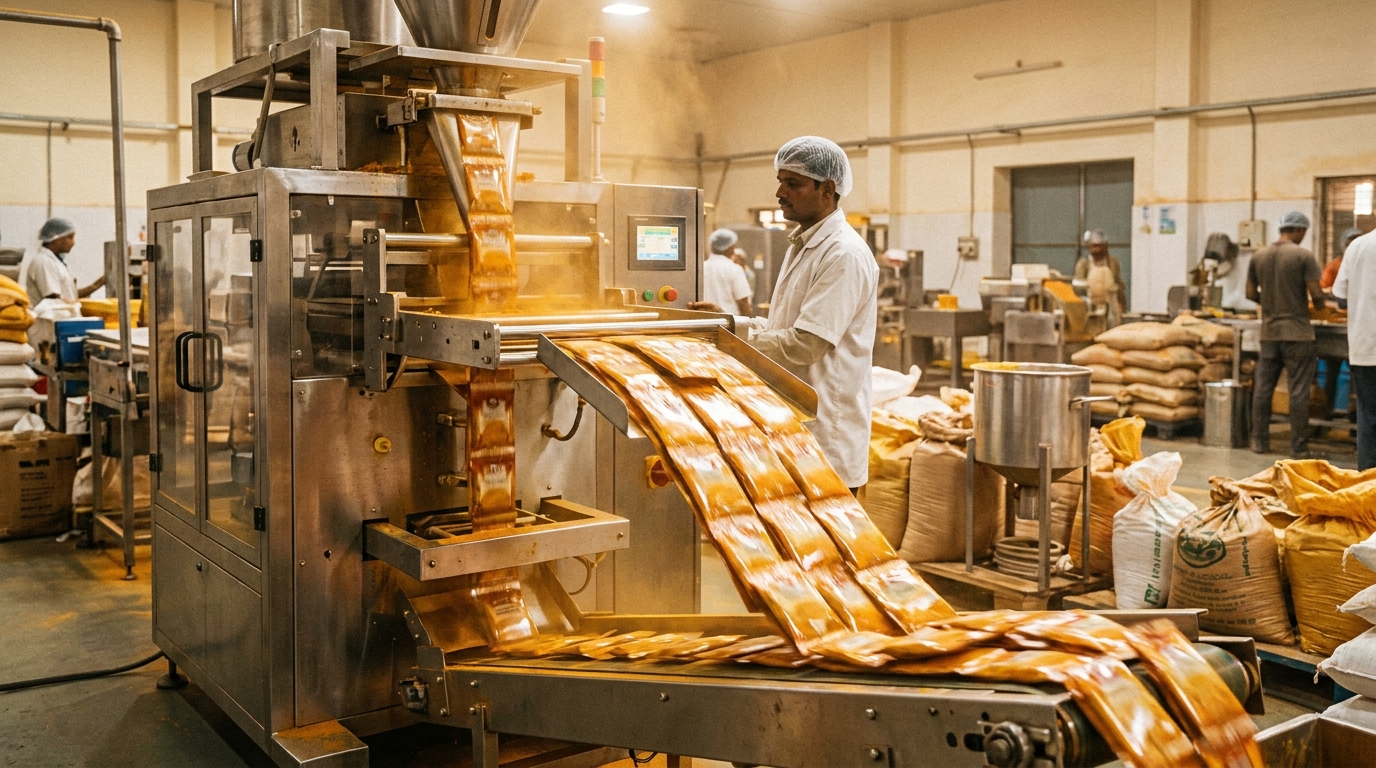
Every sachet, pouch, and small pack starts on a form-fill-seal machine — a VFFS or FFS line that unrolls a plastic film roll, shapes it into a tube, doses the product, seals, and cuts, typically at hundreds of units per minute. The machine is invisible to the consumer; it is the entire supply chain to the manufacturer.
India has approximately 39,741 registered food-processing factories — around 16.9% of all registered factories in the country. Every facility running any kind of pouch, sachet, or flexible-pack format operates at least one FFS line. The sachet categories multiplying fastest — beauty minis, protein snacks, condiments, namkeen — mean more lines, not just more output from existing ones.
India's packaging machinery market is expanding at ~8.5% CAGR through 2031, faster than the broader packaging market, because the installed base is still thin relative to the manufacturing base it serves. India still imports substantial packaging machinery under HS code 8422 — the domestic supply gap is real, persistent, and increasingly an opportunity for Indian equipment makers to fill.